
Becoming An Art
The voice of our generation, the poet, the critic, the documentarian, the historian, the spokesman, the promotor, the emcee, the writer — the artist.

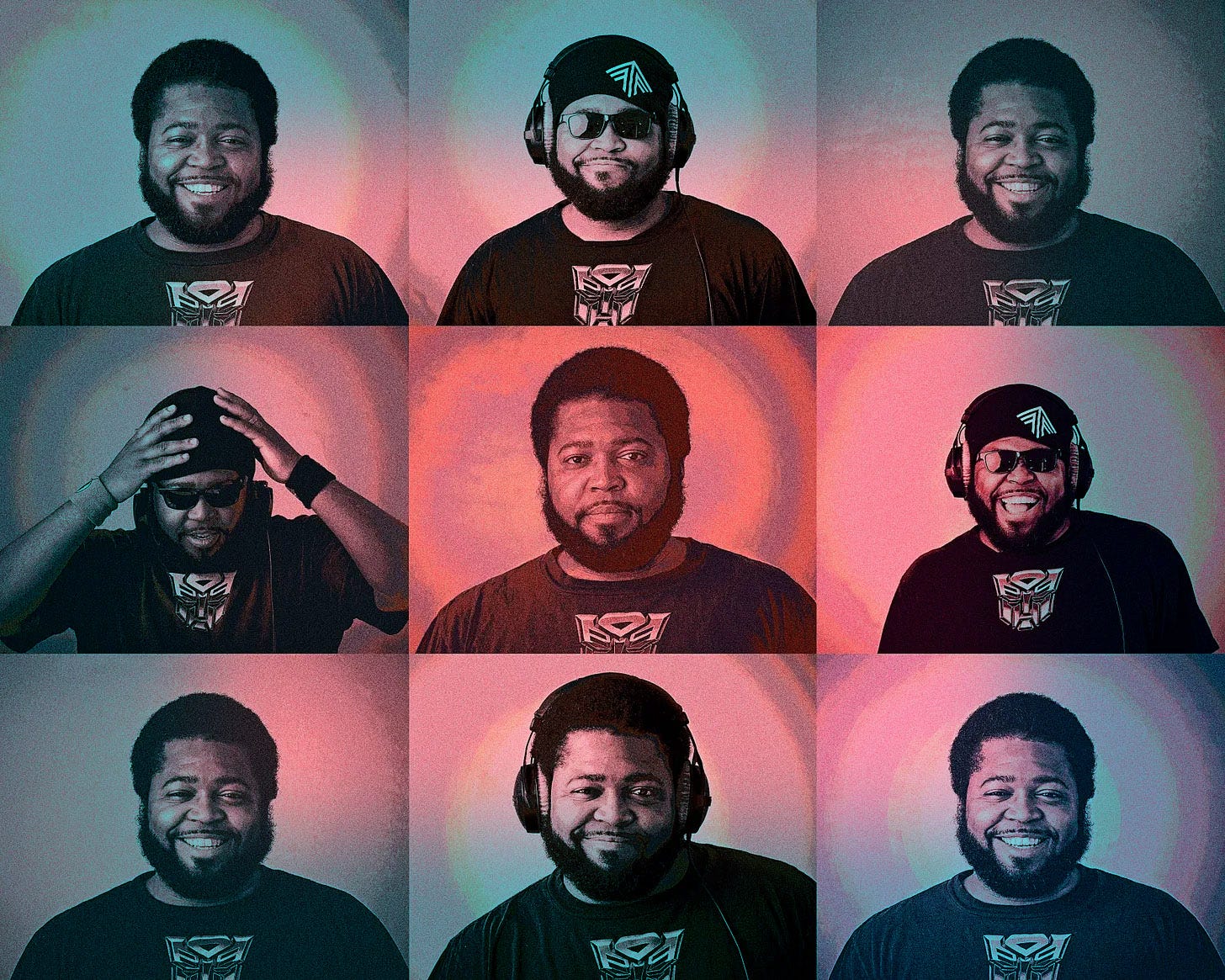
When I rolled into the office on my first day of my dream job in the opening days of 2008, I was, for lack of any adequate terms, stoked to be there. To finally be a member of the legendary photography staff that I’d dreamed of joining since dedicating my life to the craft of photojournalism. But also to meet him.
Som, the man who had inspired and eluded me through my early journalism days, would be working across the room. We’d soon become collaborators and friends, creating some of the best work of our lives together. By Halloween we’d be living through a recession and out of the jobs we’d both wanted for as long as we could remember. But let’s start with good days and the nine months that would shape the rest of my life.
Working at my dream job was less glorious than I’d imagined. Most days started with a stack of assignments and ended with fresh new stack. A longtime physician retires, a local woman wins a prestigious award, a high school basketball game ends in a nail-biting barn-burner. The Pulitzer wasn’t calling, but being part of the newsroom was never about the awards.
The newsroom was a drug. It’s difficult to describe the feeling in today’s terms, but the daily-miracle of publishing a books-worth of stories and photos every day was a dopamine rush equivalent to watching a thousand simultaneous memes. For me it would be hard to find a better job — connecting with community through the joys and heartbreaks of folks throughout the city. Etching their stories into the history of our place, into the paper of record. It felt like a purpose, but it was also more complicated than that.
Journalism was changing, drastically, losing attention to the new landscape of digital media with click-ier headlines less rules and ethics. There was always a threat of being laid off, so we kept our heads down and did the work. Though it was new every day to me, it stoped being challenging. That’s when it became difficult to tell one day from another.
Then one afternoon while I was working the late shift, Isamu Jordan wandered into the photo department. I’d scoured every issue of the paper looking for for that name, the man responsible for keeping the music alive in the city more than any other person. That evening he sat down at my desk and told me what he was mixing up for the next issue of 7.
For the uninitiated, ’7’ was the paper’s arts and culture magazine. Som had spent his career building it, highlighting the artists and musicians throughout the area. It’s central belief was something Som would often say; local artists were just as worthy as anyone touring nationally, we just had to let people know. So that’s what we did.
Som’s career was already a storied one. He’d arrived at the paper in the 90s with the first class of high-school reporters with their own section of the paper. I’d read Our Generation, while eating my breakfast before heading to high school. Long before I knew who he was, he was someone I looked up to.
Som always claimed he was “born and raised on the fourth floor,” of the paper’s iconic downtown building. Even his office looked like a teenagers’s bedroom with show posters covering every inch of wall space, albums balanced in stacks covering any flat surface.
It was the writers, photographers, designers, and editors there who became a second family to him. They encouraged him to goto college and afterward brought him back to that family. The paper gave him his platform, but the staff were mentors, in work and life.
Som was connected to the newsroom in a way that few of us were, and he changed the lives of everyone who worked with him. I mean, he taught Shawn Vestal how to enter the Wu-Tang, so you know he was a special dude.
Me and Thuy still do this for living
With or without the 4th Floor yo we still gettin’
Cash, check, American Express
Visa, debit, food stamps, credit
truth, lies, media, spies, bribes
Blackmail my soul won’t sell cuz I’m a
Black male my soul won’t sell
We met regularly, brainstorming like a cypher over his cubical wall. Most of that year we worked nights and weekends — shot band portraits in dank basements and cracked PBRs while listening to new songs. I cut videos and Som inked stories, and he taught me that the Arts are what show us who we are, together, as a community. I didn’t know that’s what we were creating then, but Som did.
It reminded me of my early journalism days when every story felt new, like it mattered. The last time I’d known that feeling was at The Evergreen, the student run newspaper where I’d missed Som a decade earlier. He graduated the year before I started as a photographer there, but the memory of him remained large in the legacy of stories he’d left behind.
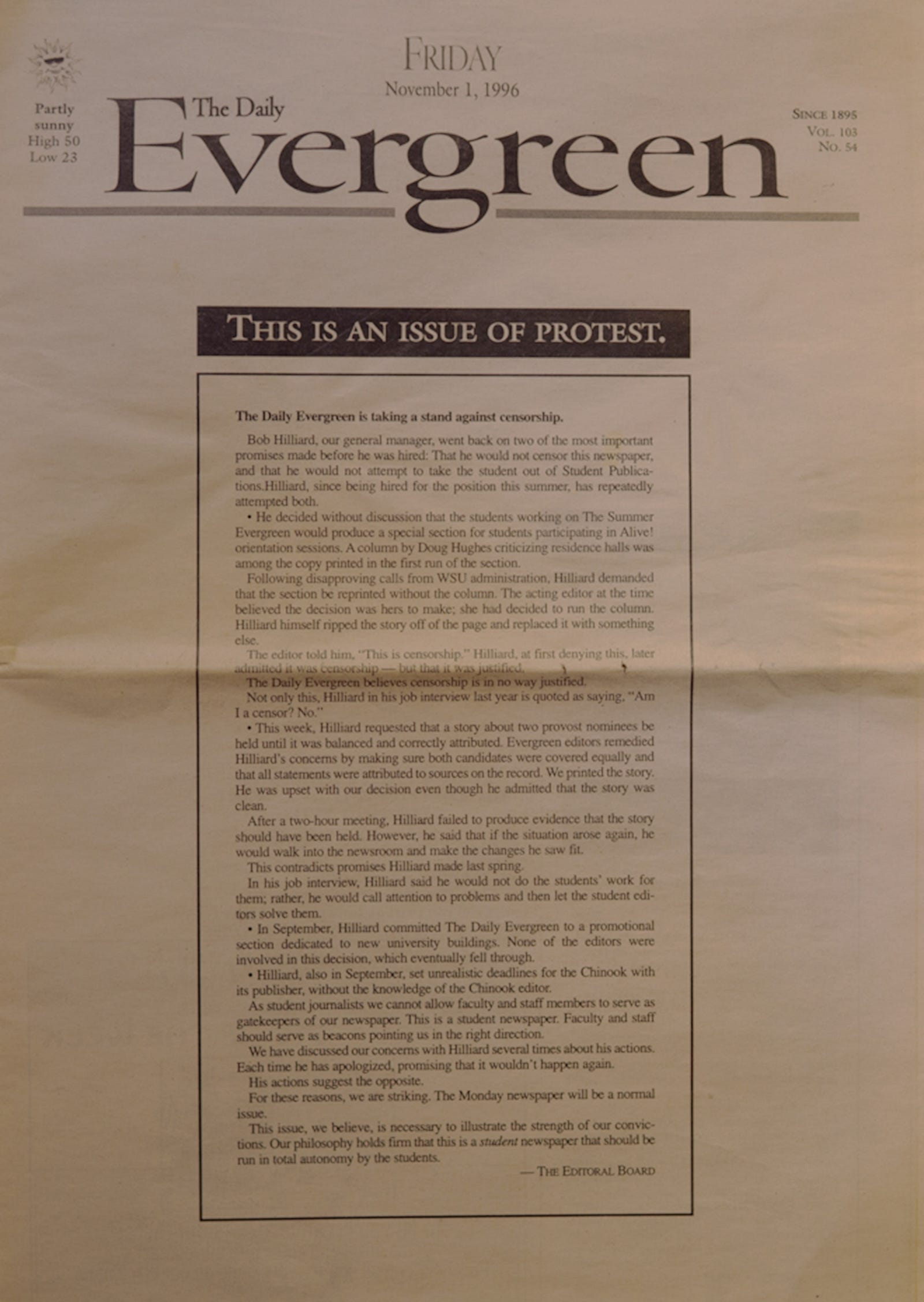
As student editor Som held university leaders accountable and published bold and thoughtful stories. In his most famous moment (or infamous depending on who you ask) he lead an opposition against the newspaper’s general manager for ignoring his promise to stay out of editorial decisions (something like the separation of publisher and editor or church and state). Som retaliated by printing an entirely blank issue of protest with no stories. It made national news.
In those young newsrooms you find a special spirit where the awakening of creativity and the documentation of community feels more like participation than mere reporting. We could see then that journalism was something you had to do to learn. It wasn’t a rigid set of rules, but a tradition that was created through trial, error, and doing it day in and day out.
I hadn’t had that feeling since, but working in Spokane with Som and telling the story of his city, the city I came to call home; we were both in it again. Even though it was only nine months, I felt we were a part of the creation and change of our community.
The night lights when I strike like Shazam
I got laid off but I’m still the best Spokesman
A positive emcee that’s worth quotin’
My kinetic energy will getcha neck movin’
That all came to an end October 1st, 2008 when we were called into an emergency meeting on the 4th floor to learn we no longer worked there. We found out our fate as our names were called, one at a time. There wasn’t a dry eye on floor that day. A writer who survived said it felt like watching a public hanging.
“Nothing unusual,” was the quote from the paper’s publisher.
“Brutal,” was the voice of the union.
By the following week nobody under the age of 35 worked there.
They closed up the podcasting studio, quit shooting video, and shut down 7 Magazine. What seemed like a tragedy then has now become the script to a dark comedy. It’s the one about how the visionary ideas we created and invested in before most anyone else was trying, which currently are estimated to be responsible for more than 80% of internet traffic, were thrown out to save a few bucks.
For years I thought I was angry about that, but I eventually realized I felt rejected — severed from a family when all I wanted was to belong. The newspaper limped into the twenty-tens, and I just tried to be thankful we were one of the last cities our size with a locally owned media. I kept my subscription, in support of my still-working homies, but it wasn’t the same paper anymore. There just was no longer a spirit in it.
For the first few months I landed some work as a freelancer, eventually transitioning to starting a photography business, and started thinking like a business man. Eventually I folded myself into an academic job for the local Jesuits and tried to find my real purpose somewhere else. I played that shell game for another decade before I found a different way.
As I was changing career fields though, Som doubled down on himself. He started rebuilding what he had spent the last two decades working on, but he had to do it from scratch. He invested everything he had into a new site — TheSomShow.com. He filmed concerts, interviewed local and traveling bands, and hosted his own awards show where the best artists took home gold Sommy Awards. He was doing it, but this time by himself.
He had to pick up a few side-gigs like teaching at the college, DJ-ing on the radio, and flipping paninis at the gas station just to make sure he could help his wife put food on his table for his family. Even as his responsibilities stacked up like his old desk of CD cases, his purpose never faltered.
He was burning it at both ends promoting shows, writing stories, taking classes, teaching journalism, taking his boys to school, rapping his own musical solo project. You could say he was building the intergalactic spaceship while flying it.
Som was grinding before it was a hashtag and when I looked over from my ivory private school tower I thought, any day this dude was gonna burn out and give up on the damn dream. Then he called and asked if I wanted to start a band.
Som is gettin’ sick and tired of the drama
Tryin’ to get right with my karma
Suckas wanna bite like piranhas and fools wanna fight over honor
Or go to war for the profit/prophet
Callin’ up Raj when it’s real life
If you want beef, we’ll bring it to you carne asada
The Flying Spiders grew quickly into a self described eleven-piece hip-hop orchestra. Som built it one member at a time, selecting from the finest musicians he’d come to trust through his work. Som was methodical about the creation of the group, focusing on both the minutiae and the big picture, making decisions quickly and without regret. “Evil dictator” he’d say, and laugh. Somebody had to do it.
For almost three years we practiced, recorded and played. We released three EPs and packed venues across the area. A Spiders’ show didn’t end until they flickered the closing lights and Som sweat through his three layers. He’s still the only emcee I ever saw to drop bars that’ll rewrite your understanding of life in slacks, a sweater and collar. Always red, white, and black.
Som had crafted the plan for the next dozen records, storylines for comic books were detailed in his reporter notebooks, and somehow he wrangled a near dozen band members to practice every week. He was putting everything he had left into the band, and I watched as his other other obligations began wither under the weight of his work.
Through growing up with the uncertainty of poverty, a mother struggling with mental illness, the family he’d had a falling out with, the family of four he was trying to hold together, the confidence he was flexing through the layoff and firing and various unexpected setbacks, the addictions which quieted the voices but couldn’t cap the pain, the responsibility of leading a band to the promise land. Music was the escape, and the obsession, and it probably felt like it was the only way out. The last hope.
Then one morning after a particularly disastrous band practice in September, Som was gone.
We all wondered if we could have stopped it, blamed ourselves publicly, blamed others secretly, wondered if it was true. We grieved together, filled the downtown theater in memorial with friends and family and fans. His old newspaper celebrated him in a section dedicated to his life. The band broke up and got back together, and broke up again. Then suddenly, it was twelve years later.
D.E.S.T.R.O.Y. all the pain from the past
Focus on the good times that we used to have
Still when I think of myself I see your face
I dedicate this to you for providing ya space
You didn’t judge, when i broke like a promise
Identified ourselves by the names they would call us
Just bein’ honest and style’s making dollars
And the next rhyme I write will have to be about Thomas
I’ll die when it’s time, I’m in no hurry
Tryin to be a Spokane legend like Larry
Vinny if you beat me, write this on my tomb
When they reminise about you
Listen
See, I turned off The Som Show after he left. I couldn’t watch it anymore, didn’t want to. I put my instruments away and authored my way through an entire three-year program in memoir writing without even acknowledging it had happened. Either it hurt too much or it didn’t matter, they were the same feeling then.
Last year while reminiscing with a friend about those days, someone reminded me of Be An Art, a slam poem Som wrote and performed in 2009. Somehow it survived, still on the YouTube Channel he started when we got laid off. Watching it now, Som alone on the stage in the 90s style coffee shop where we hung out back then. No influencer lighting setups or high definition cameras., just Som in his Flash hoodie trying to help us all understand what art is. That’s when realized what he was trying to do. I could finally see the idea that resonated at the center of his creative being. Anything can be an art.
Be An Art is an idea free of ownership or limits or rules. It is both a call and a response. It is a means of empowerment for you and what you are trying to say, or show, or see, or do. It’s a permission slip, if you need it. It’s an invitation if you never received one. It’s whatever you need it to be, and it’s already yours.
Last year we created a space to celebrate this idea during September, Som’s month of origin and departure. The space was a gallery, and we spent months creating the experiences within it. The show brought together the multiplicative communities he worked with.
Opening night the room was filled with a cross-section of the city — the journalists and the rappers and the painters and the break dancers and the photographers and the writers — all remembering why we knew one another; what we had in common. For most it was Som, but for some it was an idea.
The longer Som’s been gone, the less I remember him. Epic stories have become ‘remember when’s’, and the memories of playing all those stages has continued to fade as if leaves falling slowly. Every year my friend Som slips further away, but his words and ideas, lyrics and music become more concentrated and relatable. They continue to find new depths.
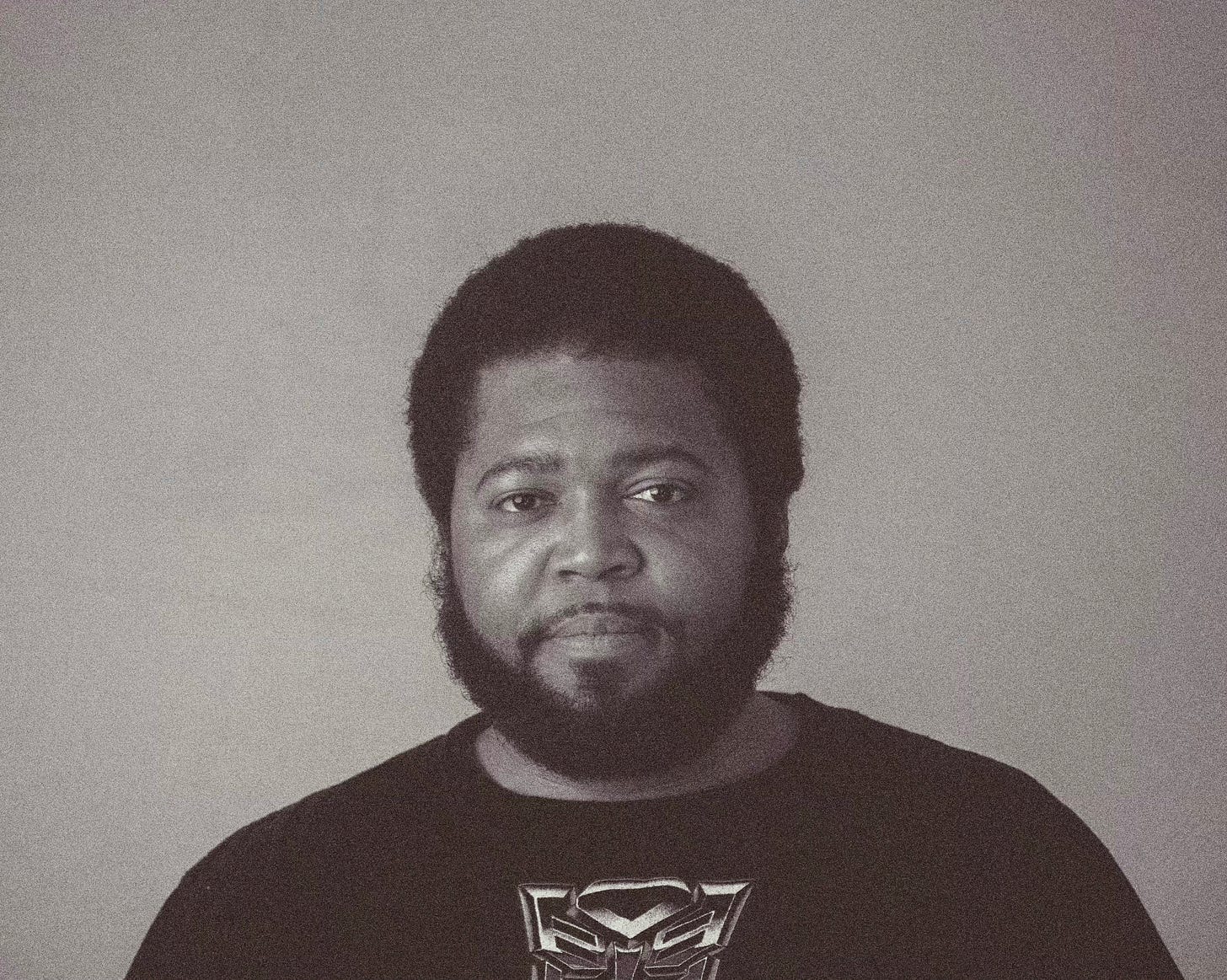
I’ll say it though, I’m conflicted on turning a friend into a slogan, a literal poster child for art. I now remember his ideas more than I do him. This photo of Som is from the second album photo shoot. In all the other photos, Som is laughing or beaming, but in this one I can see the two people he was. The joyful intensity of the keeper of a sacred idea, and the inner conflict of a warrior in darkness. Som never asked to be remembered this way, but for me, he has become an art.
I find life mind boggling.
Here we are together
But going through it separately
I wrote this in the key of connectivity
So every time you see me you see you in me
Without U-N-I there’s no unity
Som didn’t hide where he came from, he highlighted it. He raised his city up, told her history, told his story. He knew a place can only be a place if it knows itself, if it seeks out and questions itself.
Without something to connect us, it is difficult to see what we share. Som taught me it is through art that we understand who we are collectively and individually, as family and as community.
This city, this country, this brother and sisterhood we share accross any border. I believe Som knew we could create the kind of place we want this to be. For me his words have become a map for that idea; for the paths we are on, together and separately.
When Som was silenced by those in power, he wrote. When they took away his pen, he grabbed the mic. He may have left us before we had a chance to appreciate what he was doing, but his art still speaks.
Style is uncommon
Voice is rare.
Flow is water and fire
But my sign is air
Try to stay grounded
Might float away
And come back as a lion
They took my pride away
But my spirit’s defiant
My space is a moment and time is rushing by like a tidal wave
Dustcloud now spinnin’ out of orbit
Wash away and cover up
So they can’t absorb it and board it
Put my mind to it and blew it
When I couldn’t write it I drew it
And when I couldn’t draw it was music
I think I see a light coming through it
I speak truth even when muted
Deep rooted castaway and rescued it
Isolated when I should have recruited
Relate to it?
Fascinated by the way that I do it
It’s a powerful gift I don’t abuse it I’m truant
Brush your teeth
Comb your hair and go to work
After that we gone party like your last night on Earth